
Memories in mist
Memories in Mist
You peer through a small handheld device, Soviet-era, ordered off Etsy, and look at a photograph through a transparency. It's an intimate act. Your eye to a viewfinder, someone else's memory inside it. Around a deconsecrated chapel. Red velvet curtains hanging within the columns. Mist settling over faces that won't quite be revealed.
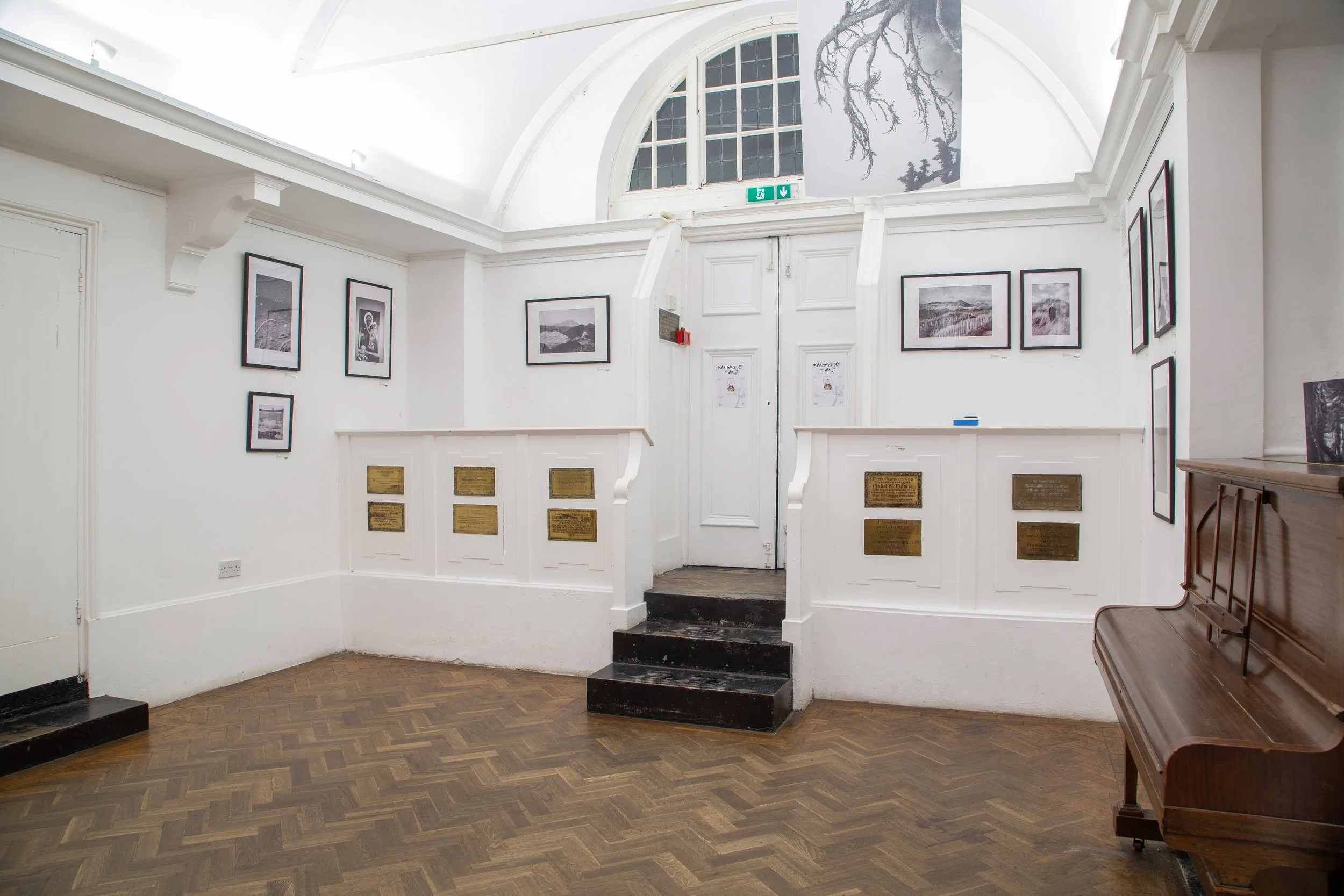
Late last year, we visited Memories in Mist, Arlau's solo debut at The Chapel in St. Margaret's House the vintage diascope loaded with Arlau's transparencies. Curator Margarita Makhanova had worked with digital transfer film before and knew she could imitate a positive using a regular printer. The rest came from a shared childhood memory: both she and Arlau grew up in post-Soviet households, both remembered the diascope. So they sourced one. Replaced the old positives with new ones. Altered the memory inside the machine.
An apt metaphor for what the work is doing across the whole show.
Known as Arlau, Laura Soboleva is a London-based photographer working primarily in analogue. Her practice centring on “mythological memory”: the way places hold what is collectively and personally remembered, and the point at which those two things stop being distinguishable. Drawing on Vladimir Propp's structural idea of Slavic folk narrative. landscape never backdrop but active, the forest as threshold between known and unknown, the river where transformation happens. Her photographs work through this. The figure doesn't pose in the landscape; but inhabits it.
What this looked like in practice: faces dissolved into light. Figures meshed into tree lines, into grass, into fog. Images partly obscured by mist, literal or otherwise. They feel approximate. They give you the feeling of a memory without the specificity. Recognition without location.
Makhanova told us of receiving sixty images from Arlau in the initial editing process. She printed each one at thumbnail scale, cut them out, and physically arranged them against a hand-drawn floor plan of the chapel before the hang, a drafting method that produced a result almost identical to the final show. The images grouped into four areas: nature, religion, fairy-tale references, self-portraiture.
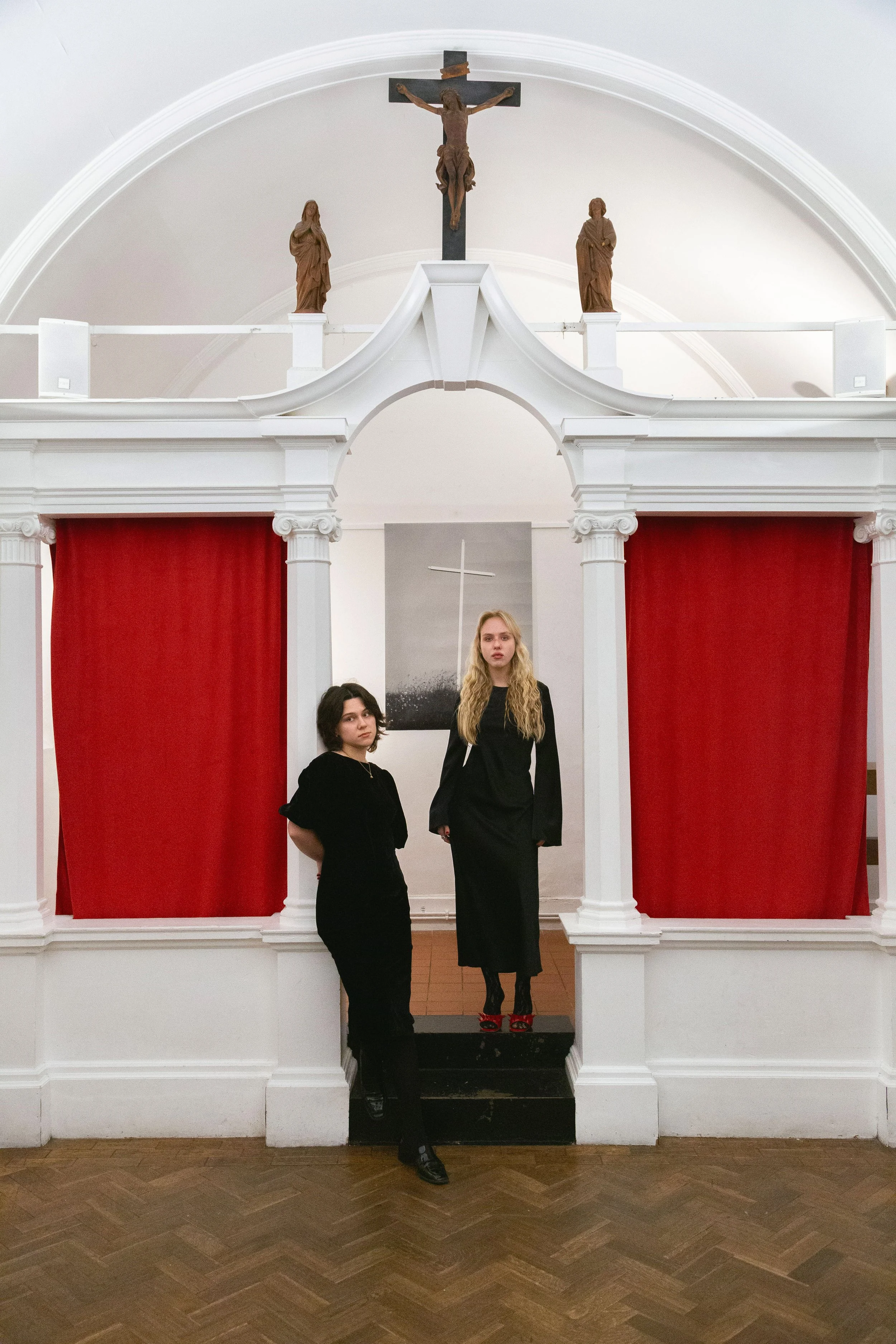
Makhanova works with a principle of simple exhibition design, prefering to respond to existing architecture rather than overbear. Here, that meant incorporating the stained glass, the altar, the wooden cross into the work itself. The Triptych, three photographs on wooden blocks, was placed alongside the existing stained glass panels. At the far end, a pair of red velvet curtains divided, drawing visitors toward the altar where the centrepiece waited, a figure in a field, holding a cross, face dissolved into light.
Two photographs in the show were taken on red film. Makhanova chose them as accent pieces, and the curtains mirroring them. The exhibition is not a religious work. But standing inside it, with the cross, the stained glass, the curtained altar, the obscured faces, it's hard not to feel the weight of things that persist past the point of understanding.
Arlau arrived at the title, Memories in Mist, through the observation that most of the sixty photographs shared a similar quality, familiarity without rigidity. You couldn't place the location. Couldn't read the face. The faces in memory, she noted, fade away. Parts of a memory are covered in a metaphorical mist.
Written by Harry Peg, May 2026.
